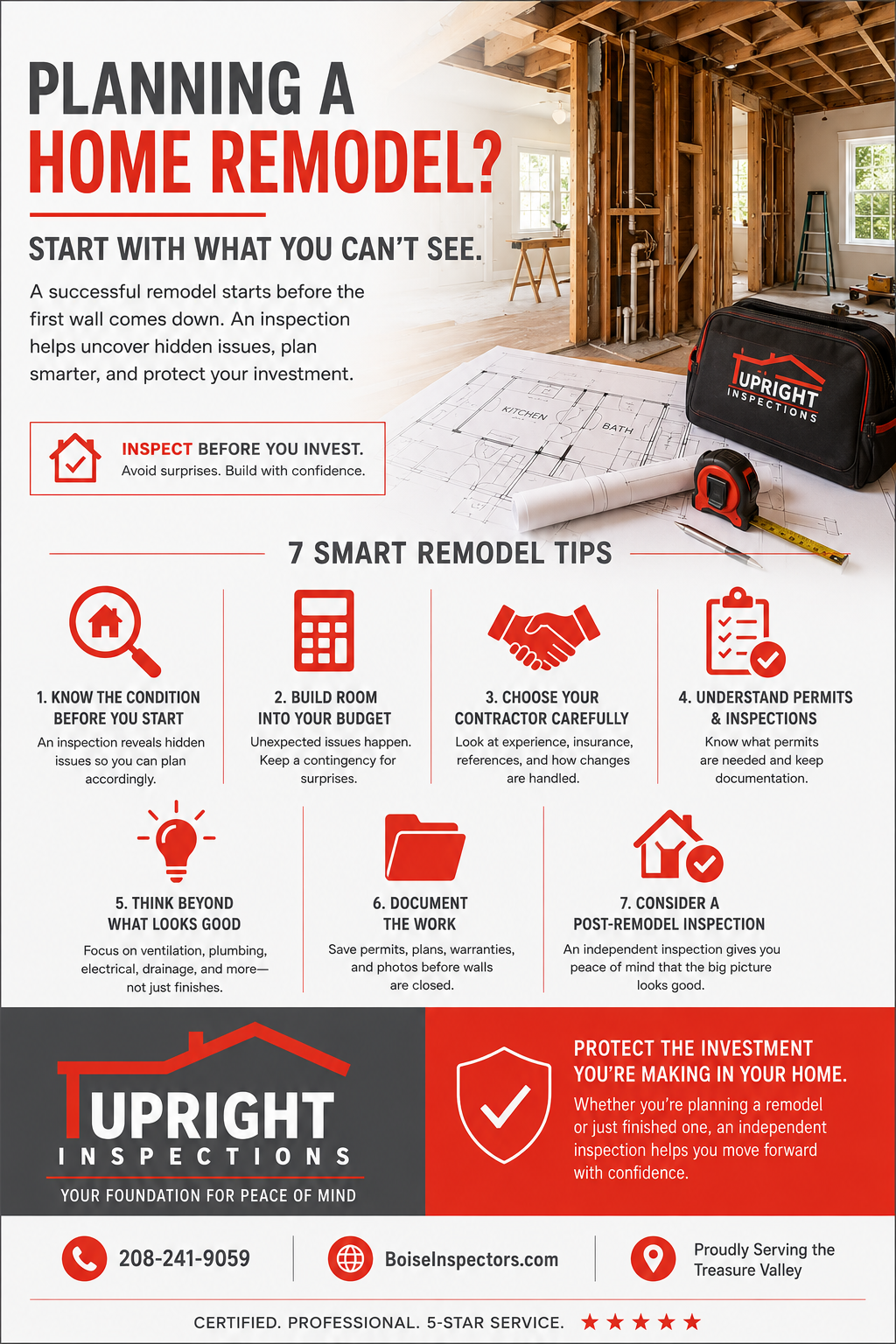
Planning a Home Remodel? Start With What You Can’t See
A home remodel can improve comfort, functionality, and value—but some of the most important decisions happen before the first wall comes down.
Whether you’re remodeling a kitchen, updating a bathroom, finishing a basement, or tackling a larger renovation, good preparation can help prevent expensive surprises.
1. Know the Condition of the Home Before You Start
Before investing thousands of dollars in finishes, cabinets, flooring, or fixtures, it makes sense to understand the condition of the systems behind them.
A professional home inspection may identify concerns involving:
Plumbing and potential moisture issues
Electrical systems
Attic and crawlspace conditions
Roof and exterior drainage
Heating and cooling equipment
Structural components
Ventilation and insulation
Finding an issue before construction begins may allow it to become part of the remodeling plan instead of an unexpected change order halfway through the project.
2. Build Room Into Your Budget
Remodeling often exposes conditions that weren’t visible beforehand. Older plumbing, improper wiring, previous repairs, moisture damage, or deteriorated materials may not become apparent until finishes are removed.
Keep a reasonable contingency in your budget for the unexpected.
3. Choose Your Contractor Carefully
Look beyond price alone. Ask about experience with similar projects, insurance, applicable licensing requirements, warranties, scheduling, and how changes to the original scope will be handled.
Get the scope of work in writing and make sure you understand what is—and isn’t—included.
4. Understand Permits and Inspections
Depending on the work being completed, building, electrical, plumbing, or mechanical permits may be required.
Ask your contractor which permits apply, who is responsible for obtaining them, and what municipal inspections will occur during construction.
Keeping documentation from permitted improvements can also be valuable when the property is eventually sold.
5. Think Beyond What Looks Good
It’s easy to focus on countertops, flooring, tile, and paint. As a home inspector, I’m also thinking about what happens behind those finishes.
Will the new bathroom have adequate ventilation?
Are plumbing penetrations properly protected?
Are electrical improvements appropriate for the new use?
Could changes affect drainage, structure, insulation, or ventilation?
A beautiful remodel should also function properly for years to come.
6. Document the Work
Keep permits, invoices, warranties, product information, plans, photographs, and contractor documentation together.
One especially useful idea is to take photos before walls and ceilings are closed. Those photographs can provide a valuable record of plumbing, wiring, framing, insulation, and other components that will eventually be concealed.
7. Consider a Post-Remodel Inspection
Once the project is complete, an independent inspection can provide another set of eyes on the finished work.
The purpose isn’t to replace required municipal inspections or evaluate workmanship cosmetically. It’s to look at the home from a broader perspective and identify visible concerns that may deserve attention before you consider the project finished.
Protect the Investment You’re Making in Your Home
Remodeling is about more than creating a better-looking space. It’s an opportunity to improve and protect the home itself.
At Upright Inspections, we believe understanding the condition of your home helps you make better decisions, prioritize expenses, and reduce unnecessary surprises.
Planning a remodel—or recently completed one? Consider an independent home inspection before you move on to the next project.
Upright Inspections — Your Foundation for Peace of Mind