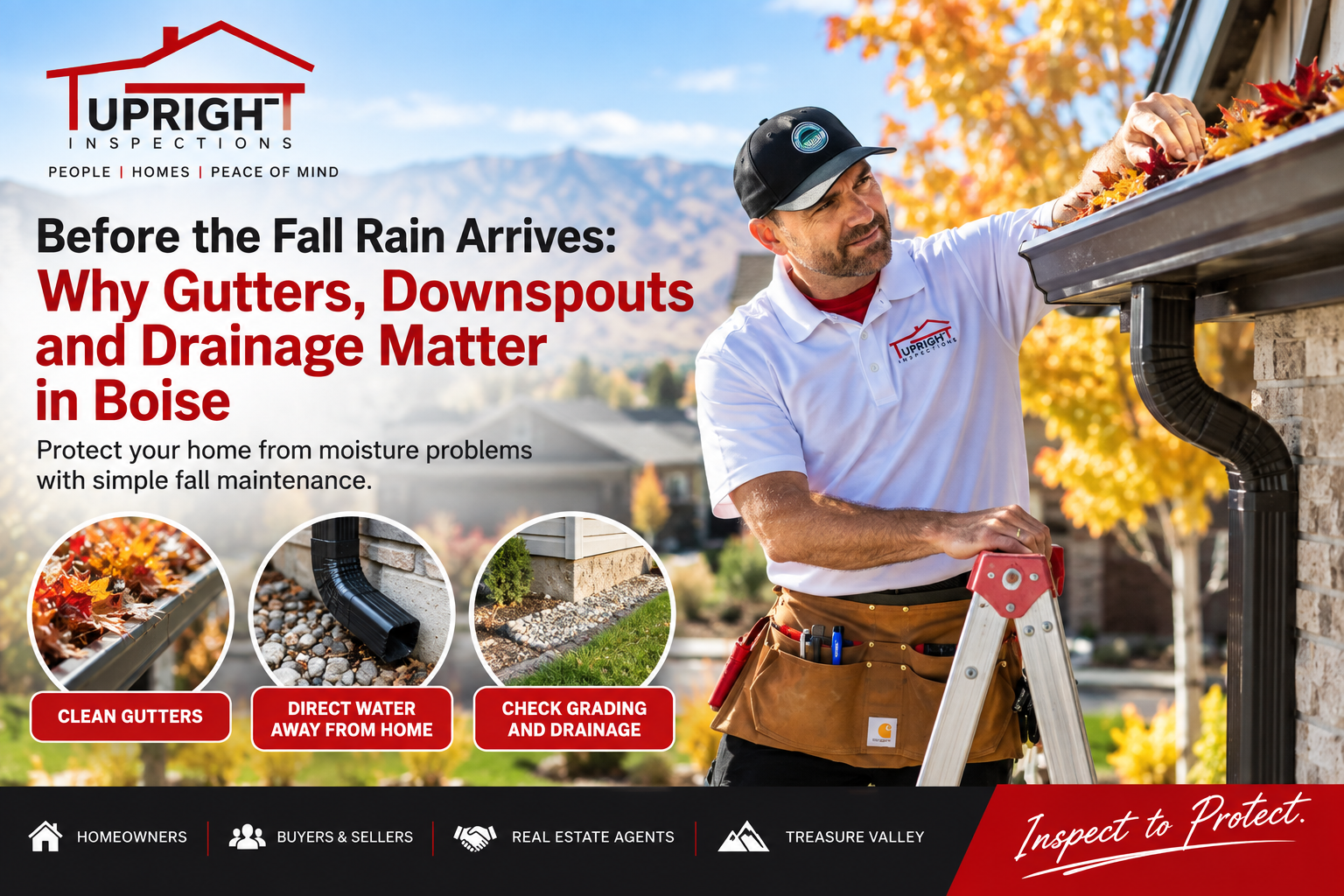
Before the Fall Rain Arrives: Why Gutters, Downspouts, and Drainage Matter in Boise
Before the Fall Rain Arrives: Why Gutters, Downspouts, and Drainage Matter in Boise
Fall is one of the best times to look at how your home handles water.
As leaves begin accumulating and temperatures change across Boise and the Treasure Valley, small drainage problems can become much more noticeable. A clogged gutter, short downspout, or low area next to the foundation may not seem like a major concern on a dry day—but once rain arrives, that water has to go somewhere.
For homeowners, buyers, sellers, and real estate agents, understanding where water goes around a home is an important part of protecting the structure.
Your Roof Is Only the Beginning
A roof sheds a surprising amount of water during a storm. Gutters and downspouts are designed to collect and redirect that water, but the system only works properly when the components are maintained and discharge water where it belongs.
During a home inspection, some of the conditions worth observing include:
Damaged, loose, or poorly secured gutters
Gutters containing heavy debris
Downspouts that are disconnected
Downspouts terminating too close to the foundation
Evidence of overflowing gutters
Soil erosion below downspout discharge points
Negative grading toward the house
Areas where water appears to pond near the foundation
Missing or deteriorated extensions
Splashing or staining at the foundation
These conditions don’t automatically mean a foundation has been damaged. They are indicators that water management deserves closer attention.
Why Downspout Location Matters
One of the simplest improvements a homeowner can make is ensuring roof runoff is discharged away from the foundation.
The City of Boise has published guidance emphasizing drainage away from foundations and recommends directing roof runoff away from foundation backfill soils.
That makes sense from a practical inspection standpoint: repeatedly depositing large amounts of water immediately adjacent to the foundation can contribute to soil saturation, erosion, settlement, and moisture intrusion depending on the site’s construction and drainage characteristics.
The goal isn’t simply to get water off the roof. The goal is to get it away from the house.
Don’t Forget the Grade Around the House
Gutters aren’t the only part of the drainage system.
Walk around your home and look at the ground immediately adjacent to the foundation.
Ask:
Does the surface appear to direct water away from the house—or toward it?
Watch for:
Depressions next to the foundation
Soil that has settled beneath windows or hose bibs
Mulch or landscaping that has built up against siding
Downspouts discharging into low areas
Driveways or patios directing water toward the structure
Erosion channels
Standing water after irrigation or rainfall
Landscaping can also change drainage over time. A home may have originally been graded appropriately, but years of adding soil, mulch, plants, pavers, or other landscaping can alter where water flows.
A Simple Fall Drainage Checklist
Before the wet season gets underway, homeowners can perform a basic visual check:
1. Clean the gutters.
Remove leaves, needles, dirt, and other debris.
2. Check the downspouts.
Make sure they are connected and aren’t damaged.
3. Look at the discharge point.
Water should be directed away from the foundation rather than dumped directly beside it.
4. Inspect the soil.
Look for erosion, settlement, or areas where water collects.
5. Check exterior penetrations.
Look around hose bibs, windows, doors, and other openings for evidence of moisture intrusion.
6. Watch the system during the next rain.
If possible, observe where water actually travels. This can reveal problems that aren’t obvious during dry weather.
Buyers: Look Beyond the Roof
For home buyers, drainage deserves attention during the inspection period.
A home can have an attractive roof, new landscaping, and a recently painted exterior while still having drainage conditions that warrant evaluation.
This is especially important when purchasing an older home where landscaping and grading may have changed over many years.
A home inspection is an opportunity to identify observable conditions, not to predict exactly how a property will perform during every future storm.
If significant drainage concerns are observed, an inspector may recommend further evaluation by an appropriate drainage, landscaping, foundation, or waterproofing professional.
Sellers: Fix the Simple Things Before Listing
For sellers, drainage maintenance can be a relatively inexpensive way to improve the condition and presentation of a property before it goes on the market.
Consider addressing:
Clogged gutters
Loose downspouts
Missing extensions
Obvious soil erosion
Standing-water areas
Debris around foundation walls
Vegetation contacting the structure
Obvious grading concerns
Taking care of these items before the buyer’s inspection can reduce avoidable inspection findings and demonstrate that the home has been maintained.
Home Inspection vs. Building Code
It’s important to distinguish an inspection observation from a code violation.
A home inspection is not a code-compliance inspection. An inspector evaluates readily observable conditions within the scope of the inspection and reports conditions that may affect performance, safety, durability, or maintenance.
Building-code requirements can vary based on jurisdiction, construction date, project type, and other factors.
For example, Boise documents contain specific drainage and rain-gutter provisions in certain applications and circumstances.
Therefore, a report should not automatically characterize every drainage condition as a “code violation.” When compliance or a specialized drainage issue needs to be determined, the appropriate authority or qualified contractor should be consulted.
The Bottom Line
Water is one of the most important things to control around a home.
Before the next wet season, take a few minutes to look at your gutters, downspouts, grading, and foundation area.
The question isn’t just:
“Does my roof keep the rain out?”
It’s also:
“Where does the water go after it leaves my roof?”
That question can help homeowners catch small maintenance issues before they become larger moisture problems.
Inspect to Protect
Whether you’re buying, selling, or maintaining a home in Boise, Meridian, Eagle, Nampa, Star, or throughout the Treasure Valley, Upright Inspections can help you understand the observable condition of the home’s major systems and components.
Don’t just look at the house. Understand the house.
Schedule your inspection with Upright Inspections.
Upright Inspections — Your Foundation for Peace of Mind