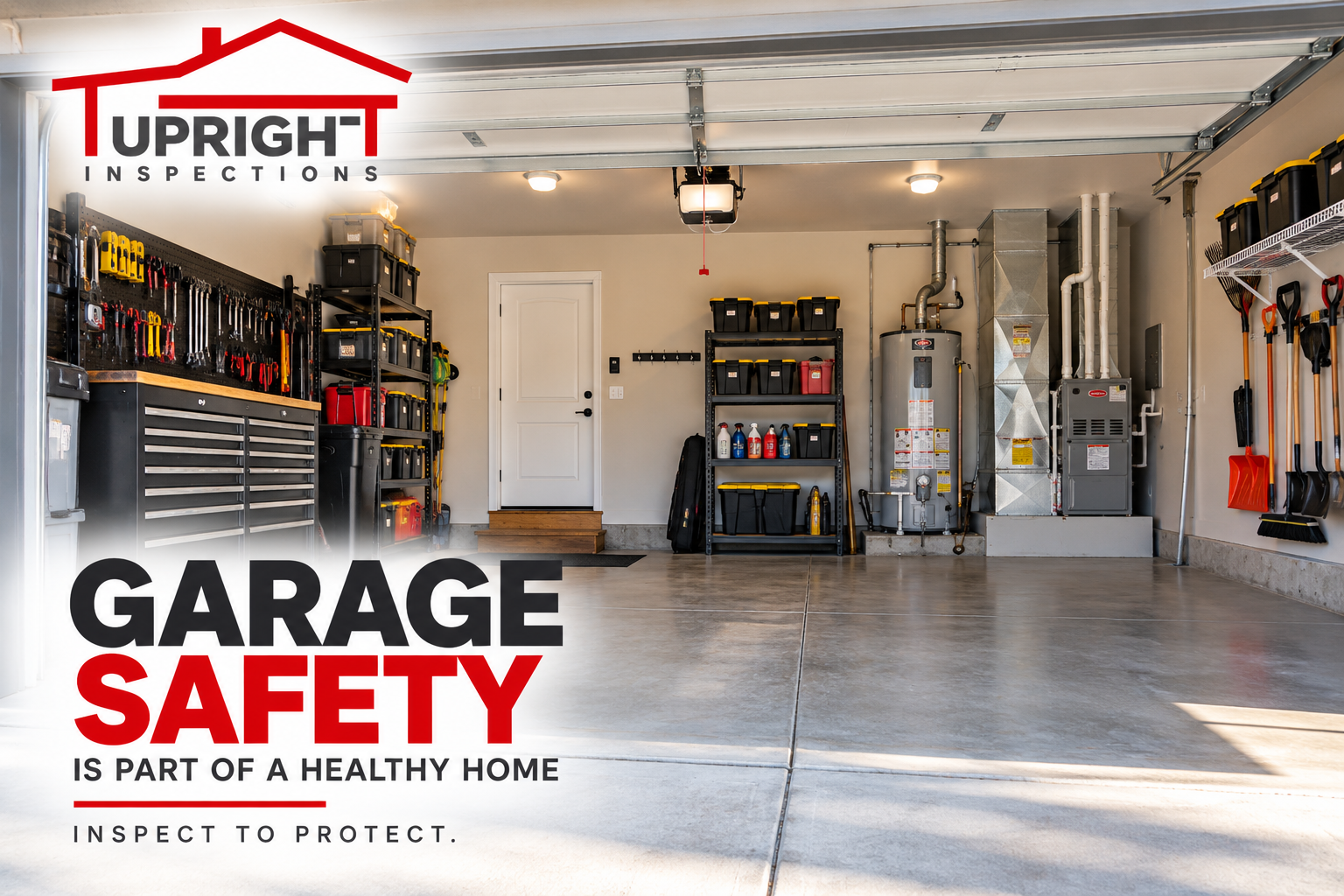
Your Garage Is Part of the Home: 10 Garage Safety & Inspection Checks for Boise-Area Homes
The garage often becomes the place where everything ends up—tools, storage bins, lawn equipment, vehicles, freezers, chemicals, and whatever doesn’t have another home.
But your garage is also an important part of the house’s safety envelope. From the overhead door and fire separation to electrical components, water heaters, storage practices, and the garage-to-home door, there are several areas worth checking before small concerns become bigger problems.
For Boise and Treasure Valley homeowners, fall is a good time to give the garage a closer look before winter weather changes how the space is used.
1. Test the Garage Door Safety Features
Your overhead garage door is one of the largest moving components in the home.
Check that:
The door opens and closes normally.
The door remains properly aligned.
The opener responds to its controls.
The automatic reverse feature operates as intended.
Safety sensors are properly positioned and functioning.
The door isn’t unusually noisy or jerky.
Don’t attempt to adjust springs, cables, or other high-tension components yourself. These systems can store significant energy and should be serviced by a qualified garage-door professional when repairs are needed.
2. Look at the Door Between the Garage and House
The door connecting the garage to the living space deserves special attention.
Look for:
Damage to the door
A door that doesn’t close properly
Gaps or poor fit
Missing hardware
Conditions that prevent the door from closing and latching
The purpose isn’t simply convenience. The garage-to-house separation is an important safety consideration because a garage can contain vehicles, fuel, chemicals, and other ignition or combustion hazards.
For sellers: this is an inexpensive area to check before listing.
A door that doesn’t close properly can become an inspection finding that could have been addressed before the buyer ever walked through the house.
3. Don’t Store Everything Against the Furnace or Water Heater
Garages frequently contain fuel-burning equipment.
If your furnace or water heater is located in the garage, keep the area around the equipment clear and follow the manufacturer’s required clearances.
Avoid stacking:
Cardboard
Paint
Gasoline
Cleaning chemicals
Yard chemicals
Clothing
Paper products
Other combustible materials
A garage isn’t automatically a storage room simply because there is open floor space.
4. Check for Water Intrusion
Look at the garage floor and walls after rainfall or snowmelt.
Watch for:
Water staining
Damp areas
Cracks with moisture staining
Efflorescence
Deteriorated drywall
Staining around the garage door
Water entering beneath the garage door
A garage can provide useful clues about drainage around the home.
If water repeatedly appears near one wall, don’t simply paint over the stain.
Try to determine whether the source involves grading, roof drainage, the garage door, plumbing, or another condition.
5. Look at the Garage Floor
Concrete garage floors naturally develop some cracking and surface wear over time.
The important question is what type of condition is present.
Look for:
Significant cracking
Vertical displacement
Deterioration
Spalling
Unusual settlement
Staining associated with an active leak
Not every crack indicates a structural problem.
A home inspection should document observable conditions and recommend further evaluation when the significance of a condition cannot be determined through visual inspection.
6. Check the Electrical Components
Garages are frequently used for power tools, freezers, battery chargers, refrigerators, and other equipment.
Look at accessible electrical components for:
Damaged receptacles
Missing covers
Loose fixtures
Extension cords being used as permanent wiring
Overloaded receptacles
Visible wiring concerns
GFCI protection where applicable
Don’t assume that every electrical condition you see is automatically a code violation.
An inspector can identify an observable electrical concern and recommend evaluation by a qualified electrician.
A formal determination of code compliance can depend on the installation, applicable code edition, modifications, and other factors.
7. Watch Extension-Cord Use
One of the most common garage problems is turning an extension cord into permanent wiring.
Extension cords are useful for temporary applications.
They aren’t intended to replace properly installed branch-circuit wiring.
If you have an extension cord running across the garage every day to power a freezer, refrigerator, workbench, or other equipment, consider having a qualified electrician install an appropriate receptacle instead.
8. Inspect the Garage Ceiling and Walls
Look at the drywall and other accessible surfaces separating the garage from the living areas.
Look for:
Missing drywall
Damaged drywall
Large openings
Unsealed penetrations
Water staining
Evidence of previous modifications
Again, an inspector may observe a condition without declaring the entire garage “out of code.”
If a fire-separation concern is observed, the appropriate recommendation may be evaluation by a qualified contractor or the local building authority.
9. Keep Flammable Materials Organized
Fall is also a good time to reorganize the garage before winter storage begins.
Keep combustible or flammable products stored appropriately and away from ignition sources.
Pay particular attention to:
Gasoline
Propane cylinders
Paint thinner
Solvents
Oil
Automotive chemicals
Lawn chemicals
Read the product’s storage instructions rather than assuming everything can safely be stored together.
10. Know Where the Main Shutoffs Are
A garage may contain some of the home’s most important service components.
Make sure you know the location of:
Main electrical disconnect
Main water shutoff
Gas shutoff, where applicable
Water heater controls
Furnace service disconnect
You don’t want to be searching for a shutoff for the first time during an emergency.
InterNACHI-informed inspection guidance includes identifying the location of the main water and fuel shutoffs as part of the plumbing-system inspection scope.
Buyers: Don’t Ignore the Garage During the Inspection
When touring a home, buyers often spend most of their attention on kitchens, bathrooms, bedrooms, and living spaces.
The garage deserves just as much attention.
Look beyond the number of parking spaces and storage cabinets.
Ask:
Does the garage door operate properly?
Does the door into the home close and latch?
Is there evidence of water intrusion?
Are electrical components in good condition?
Is the garage being used appropriately for storage?
Are fuel-burning appliances located there?
Are there visible signs of previous modifications?
A general home inspection is a non-invasive visual examination of accessible areas, so an inspector reports conditions that can be observed within the inspection’s scope rather than evaluating every concealed component.
Sellers: Five Garage Fixes Worth Doing Before Listing
If you’re preparing a Boise or Treasure Valley home for sale, start with the simple things.
Before the inspection:
1. Clear excessive storage from around equipment.
2. Replace damaged outlet and switch covers.
3. Make sure the garage-to-house door closes and latches properly.
4. Repair known garage-door problems.
5. Clean up obvious water stains and investigate the source before painting.
The goal isn’t to make the garage look perfect.
It’s to eliminate easily correctable conditions that can distract from the rest of the home.
Real Estate Agents: The Garage Can Tell a Bigger Story
A garage finding isn’t always just a garage finding.
Water staining may point toward drainage or roof runoff.
Drywall damage may indicate a previous leak.
An improperly modified wall may affect the separation between the garage and living space.
A missing electrical cover may be a simple maintenance issue—or part of a larger electrical concern.
This is why inspection reporting should focus on what was actually observed and the appropriate next step rather than automatically assigning a worst-case explanation.
Inspection Observation vs. Code Requirement
This distinction is especially important in garages.
For example:
Observation:
“Damage was observed at the drywall separating the garage from the interior living area.”
Recommendation:
“Recommend repair and evaluation to determine whether the separation has been appropriately maintained.”
That is an inspection observation.
It is not the same as saying:
“This garage is not code compliant.”
Code requirements can depend on the home’s construction date, alterations, applicable code edition, local requirements, and the specific configuration of the garage.
When a formal code determination is needed, the appropriate building authority or qualified contractor should be consulted.
A 10-Minute Garage Walk-Through
Grab a flashlight and walk through your garage.
☐ Test the overhead garage door
☐ Check the safety sensors
☐ Check the garage-to-house door
☐ Look for water staining
☐ Inspect the concrete floor
☐ Look at accessible electrical components
☐ Remove unnecessary extension cords
☐ Clear storage away from fuel-burning equipment
☐ Look for damaged or missing drywall
☐ Make sure you know the major utility shutoffs
Small maintenance items are much easier to address when they’re found during a routine walk-through rather than during a real estate transaction—or during an emergency.
Your Garage Deserves an Inspection, Too
The garage may not be the most glamorous room in the house, but it plays an important role in protecting the people and property inside.
For homeowners, a seasonal garage check can help identify maintenance and safety concerns.
For sellers, it can reduce avoidable surprises before listing.
For buyers, it provides another important piece of the home’s overall condition.
And for real estate agents, understanding what an inspection finding actually means can help keep the conversation focused on facts and appropriate next steps.
At Upright Inspections, our goal is to help you understand the observable condition of the home—not create unnecessary alarm.
Know what you’re buying. Know what you’re selling. Know what you’re maintaining.
Inspect to Protect.
Whether you’re buying, selling, or maintaining a home in Boise, Meridian, Eagle, Nampa, Star, or throughout the Treasure Valley, Upright Inspections is here to help.
Schedule your home inspection with Upright Inspections